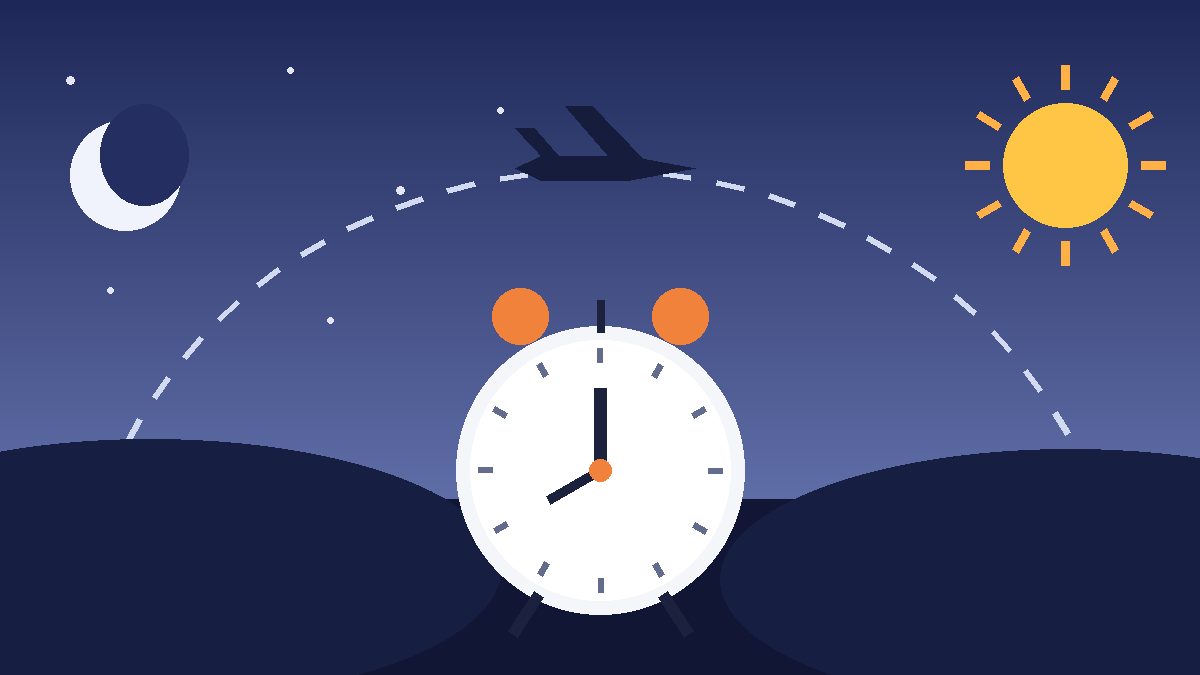
Social Jet Lag: Why Sleeping In on Weekends Makes Monday Worse
Every Friday you fly to a different time zone without leaving your bed. Your body keeps the receipts, and Monday collects them.
Friday, 11:47 p.m. The week is over, the alarm is off, and you’re doing the civilized thing: staying up late because you can, then sleeping until 10 tomorrow because you’ve earned it — and because some quiet part of your brain insists the week owes you this. Sunday night, 11:20 p.m.: you’re in bed on time, responsible, ready for the week — and completely, infuriatingly awake. Monday, 6:30 a.m.: the alarm sounds like a personal insult, and you spend the first two hours of the workweek feeling like you flew in from somewhere. You did, in a sense. Sleep researchers have a name for what you just did to yourself: social jet lag. It’s the circadian price of running two different schedules — workweek time and weekend time — and most people pay it every single week without knowing the bill exists.
Two Clocks, One Body
The mismatch, defined
Your body runs on biological time: an internal schedule set by light, habit, and genetics that decides when melatonin rises, when alertness peaks, and when sleep pressure hits. Your life runs on social time: the alarm clock, the commute, the meetings. When those two schedules disagree, you get jet lag — not the travel kind, but the same physiology, because your body doesn’t care what caused the mismatch.
Social jet lag is measured simply: the difference between your sleep midpoint on free days and work days. If you sleep 11 p.m. to 6:30 a.m. on weekdays (midpoint around 2:45 a.m.) and midnight to 10 on weekends (midpoint 5 a.m.), your social jet lag is over two hours — the equivalent, every weekend, of flying two time zones east and back. One to two hours is the most common range among working adults; teenagers and night-shift workers often run three or more.
The reason this matters more than ordinary late nights: your circadian clock doesn’t snap between schedules the way your alarm does. It drifts slowly — roughly an hour a day at best — so a weekend spent two hours later is a clock still mid-flight when Monday’s alarm lands. Monday misery isn’t sleep deprivation from the weekend; the weekend probably contained plenty of sleep. It’s arriving at work with your body still on Saturday time.
The Sunday Night Insomnia Connection
The symptom everyone recognizes
The most familiar face of social jet lag is Sunday-night insomnia: in bed on time, inexplicably alert, doom-scrolling while tomorrow looms. The mechanism is now obvious: you slept late Sunday morning, so your sleep pressure — the hunger for sleep that builds across waking hours — started accumulating hours late. Your melatonin, keyed to two days of later timing, isn’t due for another hour or two. You’re lying in a dark room asking for sleep from a body that thinks it’s early evening.
The tragic part is what Sunday-night insomnia then causes: a short Sunday night, a brutally tired Monday, an early-to-bed exhausted Monday night, and a week of schedule whiplash that only fully re-syncs around Wednesday — forty-eight hours before Friday resets the whole cycle. Many people spend their entire working lives in this loop and attribute the fatigue to the job, when a meaningful slice of it is the weekly commute between two time zones.
It’s worth being fair to the underlying drive, though. Weekend sleeping-in isn’t decadence; it’s the body’s honest vote about the week’s schedule. If your free-day sleep runs dramatically later than your workday sleep, that’s your chronotype telling you your workday timing is earlier than your biology prefers. The information is valuable. The payment method is the problem.
Why “Catching Up” Doesn’t Catch Up
Sleep debt vs. clock shift
The logic of the weekend lie-in feels airtight: the week shorted you sleep, the weekend repays it. And it half-works — extra weekend sleep does pay down genuine sleep debt, and if you’re short on hours, more hours help. The NHLBI’s resources on sleep deficiency are clear that chronic short sleep carries real health costs, so the instinct to recover isn’t wrong.
The catch is that the recovery comes bundled with a clock shift, and the clock shift has its own invoice. Research tracking large populations has linked higher social jet lag — independent of total sleep duration — with worse metabolic markers, worse mood, and higher rates of the exact complaints people blame on work stress: the grogginess, the Sunday dread, the sense of never quite syncing with the week. You’re paying down one debt while opening another.
The clean way to see it: sleep debt is about quantity, and social jet lag is about timing, and the weekend lie-in treats the first by worsening the second. What you want is a repayment method that doesn’t move the clock — which exists, and it’s the nap, arriving shortly.
The Fixes, Ranked by Realism
From ideal to acceptable
The gold standard: one clock, seven days. Same wake time every day, weekends included, within about an hour. This is the single highest-leverage sleep habit that exists — the anchor that keeps melatonin, sleep pressure, and alertness all pointed the same direction. It’s also, let’s be honest, the one nobody wants to hear, because it appears to confiscate the weekend lie-in, one of life’s genuine pleasures. Hold that thought; the compromise version is below.
The honest compromise: the one-hour rule. Keep weekend wake time within sixty to ninety minutes of weekday wake time. The clock tolerates this fine — it’s within normal daily drift — while still allowing the ritual of a slower morning. You get up at 7:30 instead of 6:30, you drink coffee in the quiet house, and nobody’s circadian system files a complaint.
Repay debt with naps, not mornings. If the week genuinely shorted you, the repayment window that doesn’t shift your clock is the early-afternoon nap: twenty to thirty minutes, before 3 p.m., ideally in the post-lunch dip when sleep pressure naturally bumps. A short nap pays hours of debt without touching your morning anchor. The long weekend lie-in pays the same debt at the cost of next week’s timing; the nap is the same transaction without the fee.
Shift the week toward the weekend. The radical option, worth stating plainly: if your free-day sleep is consistently two-plus hours later than your workday sleep, the mismatch is telling you your work schedule fights your biology — and the highest-value fix isn’t discipline, it’s negotiation. A shifted start time, a remote day, a compressed schedule: anything that narrows the gap attacks the problem at the source rather than the symptoms.
The Light Lever
Your weekend mornings are a light problem too
Timing gets most of the attention, but light is the co-conspirator. On workdays, you wake and — eventually — get some morning light. On weekends, the pattern changes: you wake late, stay indoors longer, and often get your first outdoor light after noon. Since morning light is the strongest daily signal keeping your clock anchored, the weekend doubles down: late wake time plus delayed light, each reinforcing the other.
The fix is almost offensively simple: get outside within an hour of waking on weekends, even briefly. Coffee on the balcony, a ten-minute walk to the bakery, the dog loop. You’re not chasing steps; you’re delivering a timestamp to your internal clock that says the day started at roughly the usual time. Sleep Foundation’s circadian guide covers the light-timing mechanics in detail, and it’s the same machinery shift workers and travelers use — you’re just applying it to the weekly commute between Monday-time and Saturday-time.
Evening light matters symmetrically: the bright, late, screen-lit weekend night pushes the clock later right when you need it to start thinking about Monday. The Sunday-night wind-down isn’t virtue; it’s re-entry procedure.
Special Cases
Parents, shift workers, and teenagers
Parents of young kids get an accidental exemption: the baby is an anchor. A 6 a.m. wake-up seven days a week is brutal and, circadianly speaking, excellent — many parents report their best-ever Monday mornings during the years they’d trade for any lie-in. If you have the anchor, keep it; the consistency is paying you even when it doesn’t feel like it.
Shift workers live social jet lag as a career, and the honest advice differs: full circadian advice for shift work is its own specialty, but the core principle survives — consistency within whatever schedule you’re on beats bouncing between schedules. On nights, keep nights as stable as the roster allows; the rotating weekly flip is the hardest pattern on the body, and lobbying for slower rotations (weeks per schedule, not days) is a health intervention, not a comfort preference.
Teenagers are the extreme case: adolescent biology shifts the clock late just as school start times yank the week early, producing some of the highest social jet lag measured anywhere. The weekend sleep-in of a teenager isn’t laziness; it’s a different species reclaiming its habitat. Within a household, the workable rule is the same one-hour compromise, plus morning light — and a little less moral commentary at 10 a.m. on Saturdays.
The Re-Sync Protocol for When You’ve Already Blown It
Monday triage, and better next weekend
Suppose the weekend already happened: late nights, late mornings, and now it’s Sunday evening and you’re reading this with dawning recognition. The triage:
Sunday: outdoor light early, even though you slept late; a genuinely early night is impossible (your clock isn’t ready), so aim for “reasonable” and accept a slightly short night rather than forcing hours of ceiling-staring. No late Sunday nap — protect the evening’s sleep pressure.
Monday: fixed wake time, immediate light, morning caffeine deployed early, and the knowledge that the day will feel like mild travel — because it is. An early-afternoon nap if the opportunity exists. Early night.
Tuesday and Wednesday: same anchor, and by midweek the clock is home. The whole episode then becomes useful data: how big was the weekend shift, and was it worth the Monday it bought?
Which is the actual takeaway. Social jet lag isn’t a sin to eliminate — a late Friday with friends is sometimes exactly what a life is for. It’s a cost to see clearly and keep small, so that the weekend refills you instead of quietly relocating you. The CDC’s sleep basics put consistent timing at the top of the habit list for precisely this reason: of all the levers, the schedule anchor is the one that pays every single morning.
The Weekend, Upgraded
Same pleasure, smaller bill
| Old pattern | Cost | Upgraded version |
|---|---|---|
| Lights out 1 a.m., wake 10 a.m. | 2+ hr clock shift, Sunday insomnia, Monday fog | Late night kept, wake by 8, nap at 2 if short |
| First outdoor light at noon | Clock drifts later all weekend | Coffee walk by 9 a.m. |
| Sunday: collapse into bed at 11, lie awake | Short night, hard Monday | Sunday wind-down, dim evening, reasonable bedtime |
| “Catch up on sleep” as weekend goal | Debt paid, new debt opened | Debt paid by naps; clock never moves |
The Alarm Clock Question
Should weekends have one at all?
Here’s the uncomfortable compromise that makes the whole system work: yes, keep an alarm on weekends — just a gentler one. Set it sixty to ninety minutes later than your weekday alarm, and let it do one job only: preventing the morning from drifting into clock-shift territory. You’re not waking to a schedule; you’re waking to protect one. There’s a real psychological difference between “alarm because the week demands it” and “alarm because Monday-you asked Saturday-you for a favor,” and most people find the second one much easier to obey.
If the gentler alarm still feels like theft, run the experiment honestly for one month: four weekends with the capped lie-in, tracking nothing fancier than how Monday morning feels on a ten-point scale. Most people who try it report the same surprise — the lie-in was never the pleasure they thought it was. The pleasure was the permission, the lack of urgency, the slow coffee. All of that survives an 8 a.m. wake-up. What doesn’t survive is the extra two hours of unconsciousness, which you weren’t enjoying anyway, because you were unconscious.
The genuinely sleep-deprived version of you will still occasionally need the big sleep — after a brutal week, a late event, a stretch of short nights. Fine. Take it, knowingly, the way you’d take an actual flight: enjoyable destination, jet lag included, re-sync protocol on return. The problem was never the occasional crossing; it’s the weekly one you stopped noticing.
What the Good Weeks Feel Like
The payoff, described honestly
People who hold a stable schedule for a few weeks describe the change in suspiciously quiet terms. Nobody reports boundless energy. What they report is that Monday stopped being an event — that waking got less negotiable, that the Sunday-night ceiling-staring faded, that afternoons lost some of their edge. The mechanism is boring and wonderful: when your clock knows what’s coming, it starts preparing. Melatonin rises before bed instead of after you’re lying there annoyed; alertness chemistry shows up before the alarm instead of forty minutes after it.
The weekend changes too, in a way nobody predicts: mornings come back. When 8 a.m. on Saturday feels like 8 a.m. on Tuesday — awake, functional, unhurried — the weekend effectively gains hours, and they’re the best hours, the quiet ones. The old deal traded Monday’s functionality for two extra hours of Saturday sleep you don’t remember. The new deal keeps Saturday morning and refunds Monday. It’s not a sacrifice. It’s arbitrage.
This article is educational and is not medical advice; persistent sleep problems deserve a conversation with a clinician. Sources referenced include the Sleep Foundation, the National Heart, Lung, and Blood Institute, and the CDC. No affiliate links or sponsored content. External links verified live at publication, August 2026.