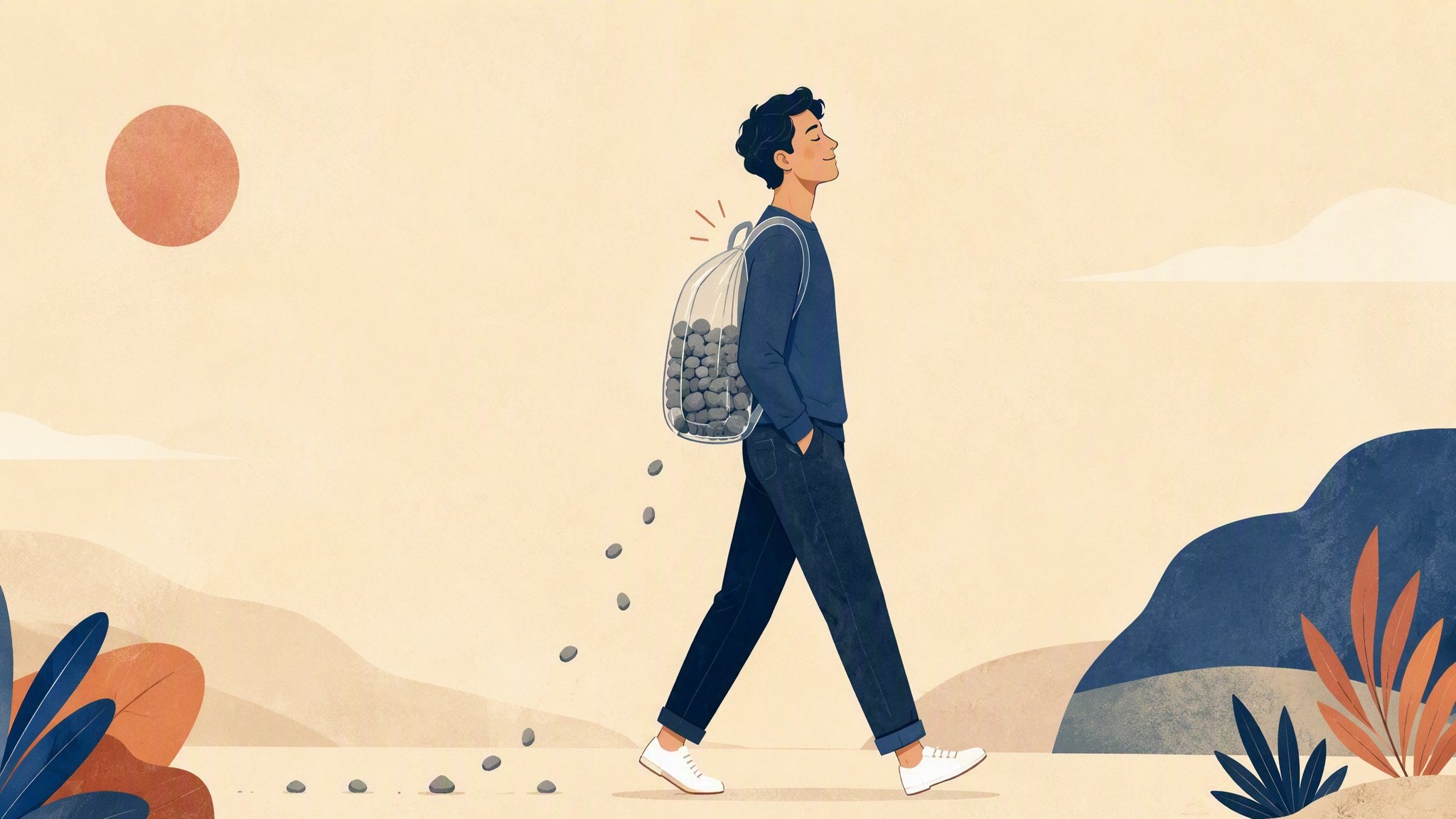
The Stress You Don’t Notice: Low-Grade Tension and What It Costs
No crisis, no deadline, nothing wrong on paper, and yet your jaw aches by noon and you can’t remember the last deep breath. Welcome to background stress, the kind that bills you without ever announcing itself.
Try something right now. Unclench your jaw. Drop your shoulders from your ears. Let your tongue fall from the roof of your mouth. Take one full breath, the first one in a while, probably. If more than one of those applied, you’ve just demonstrated the thesis of this article: your body was braced and you had no idea. There was no emergency. You’re just… like that, most of the time, and so is nearly everyone you know.
This is low-grade chronic stress, the background radiation of modern life, and it’s a different animal from the acute kind. No single event to point at, no dramatic symptoms, no obvious reason to complain, which is exactly why it runs for years unchecked. The research term for the cumulative wear is allostatic load, the total cost of a stress system that never fully stands down. This article is about noticing it, tracing its sources, and installing the downshifts that actually move the needle, because “just relax,” as an instruction, has a success rate of approximately zero, as you already know if anyone has ever said it to you.
Why You Can’t Feel It Adaptation is the trap
The stress response was designed for events: a threat appears, the body mobilizes, the threat resolves, the body stands down. Chronic background stress breaks the last step. The stressors never resolve, they’re a queue, not an event, so the system never gets the all-clear, and your physiology recalibrates to a slightly-activated state as the new normal. You can’t feel the water you swim in. The first time your shoulders crept up during a workday, you noticed. The ten-thousandth time, it’s just where shoulders live.
This is why the standard check-in question, “am I stressed?”, produces the wrong answer. You compare today to yesterday, and today feels like yesterday. The useful comparisons are longer-range: would the you of five years ago recognize this baseline? Do vacations produce a strange, unfamiliar looseness by day four, a feeling you later realize is just your actual resting state? Background stress hides behind exactly that normalization, and the people most marinated in it are often the ones most certain they’re fine.
The Body’s Tells Where the tension files its reports
The mind normalizes; the body keeps receipts. The classic signatures of low-grade chronic activation: the jaw (clenching and grinding, day and night, dentists see it first), the shoulders and neck (the desk-worker’s permanent shrug), the breath (shallow, chest-high, and, famously, intermittently held, researchers have documented “email apnea,” people literally holding their breath while typing). Then the subtler ones: sighing frequently (your body auto-correcting shallow breathing), a gut that cycles between complaints, waking unrefreshed, getting every cold that passes through the office, and a startle response set a notch too high.
The APA’s system-by-system account of stress reads like this paragraph with citations: musculoskeletal tension, cardiovascular load, digestive disruption, immune suppression, sleep fragmentation. None of these symptoms scream. They accumulate. And because each one has plausible alternative explanations (the mattress, the weather, the age), the common root goes unidentified for years. The pattern is the diagnosis: five small complaints with no single cause usually have a single cause.
Where It Comes From The ambient sources
Ask someone with background stress what’s stressing them and they’ll draw a blank, because the sources are ambient rather than acute. The usual contributors: the permanent low hum of financial vigilance (even solvent people run it; see our piece on money stress), caregiving’s invisible overtime, a job that’s fine but never off, the news cycle’s drip of unmanaged alarm, traffic and noise, clutter and visual chaos at home, the social-media undertow, and, a big one, loneliness, which the body registers as a threat state even when you’re “fine being alone.”
The APA’s stress surveys show the same handful of sources, money, work, the economy, the news, health, year after year, which tells you this isn’t a personal failing or a bad month. It’s the water supply. Nobody is going to remove the sources; the skill is in changing what your body does with them, which is fortunately a skill, not a personality trait.
Measuring Your Own Baseline Two honest instruments
You can’t manage what you can’t detect, and detection here is body-first. Instrument one: the three-times-a-day body scan. Set three phone reminders (10 a.m., 2 p.m., 6 p.m.) labeled “jaw, shoulders, breath.” When they fire, spend fifteen seconds locating tension and releasing it. That’s the whole practice. What it builds is interoception, the ability to notice your own state, and most people are startled by the week-one data: the jaw was clenched at every single check. The check itself starts catching tension earlier, and over weeks the baseline actually drops, because tension noticed is tension that gets released instead of compounded.
Instrument two: the weekly one-liner. Once a week, same day, write one sentence rating the week from one to ten, plus what’s bracing you. Two months of these sentences is a map no memory could give you: patterns emerge, the dread is always Sunday, the tension spikes on meeting-heavy days, the bad weeks share a feature. Memory is a lousy instrument for chronic states; two lines of weekly data are a good one.
The Downshifts That Actually Work Physiology first, affirmations never
Because the stress lives in the body, the effective levers are body-shaped. The physiological sigh (two quick inhales through the nose, one long mouth exhale, repeated a few times) is the fastest known brake, it directly engages the parasympathetic system and works in under a minute, at your desk, in a car, before a hard conversation. Walking deserves its perennial spot: rhythmic, low-intensity movement metabolizes stress chemistry, and twenty minutes outside measurably lowers cortisol, with green surroundings boosting the effect. Warm social contact is a downshift nobody bottles: a real conversation, a hug that lasts past the awkward point, laughter, all register physiologically as safety signals, which is precisely what a braced system needs.
And then the boring infrastructure: sleep (stress fragments it; fragmented sleep amplifies stress; the loop has to be broken somewhere), caffeine sanity (it’s a stress-signal amplifier, not a fuel), and the news and notification diet that keeps ambient alarm from topping you up hourly. Notice what’s not on the list: bubble baths, crystals, and most of the wellness aisle. The effective downshifts are unglamorous, free, and slightly boring, like everything else that works.
The Two-List Exercise The mind’s half of the job
The body work stands down the alarm; this addresses what keeps setting it off. Once, on paper, split what’s bracing you into two lists: things I can influence and things I can’t. The insight isn’t the lists themselves, it’s what attention does next. Background stress feeds on the second list, the economy, other people’s choices, the future, because those produce infinite worry with zero available action. The first list, even when its items are hard, produces a different state: problem-solving, which the nervous system experiences as agency, and agency is the opposite of threat.
The practice: for every second-list item that keeps recurring, write the corresponding first-list action, even a small one. Can’t fix the industry; can update the resume. Can’t control the diagnosis; can book the appointment and cook the vegetables. Can’t stop the news; can choose when it enters your day. This is the Stoic move and the CBT move wearing the same coat, and it works because it redirects the brain from monitoring to doing. Monitoring without action is the definition of background stress.
The Consumption Audit What you let in counts as exposure
One source deserves its own paragraph because it’s both massive and fully voluntary: the inputs. News, feeds, group-chat outrage, the ambient panic of other people’s posts, each one is a tiny dose of threat your body metabolizes as real, because the stress system doesn’t distinguish between a lion and a headline. The test is the aftertaste: does this input leave you informed or activated? Informed is finite and quiet; activated is bottomless and twitchy. Structure the informed kind, fixed times, chosen sources, and fence the activated kind out of the day’s bookends. This isn’t denial or privilege-talk; the world’s problems do not need your cortisol, and your body, the one instrument you actually have for helping with anything, runs better without the hourly drip.
When Background Becomes Clinical The honest boundary
Everything above is for the common condition: a normal stress system running too hot for too long. Sometimes the dial is past that range. The escalation signs: the tension comes with persistent worry you can’t turn off, panic episodes, avoidance that’s shrinking your life, or a flatness and exhaustion that sleep doesn’t touch, patterns that suggest an anxiety disorder, depression, or burnout rather than ambient stress. Those are clinical matters with genuinely effective treatments, and the APA’s stress resources include guidance on when self-help stops being sufficient. The rule of thumb: if the tools in this article help within a few weeks, you were probably dealing with background stress. If they bounce off, that’s not failure, it’s information, and the next step is a professional conversation, ideally sooner than your instincts suggest.
The Maintenance Habit Keeping the needle down
Background stress isn’t cured; it’s managed, like blood pressure. The sustainable endgame is a small standing system: the thrice-daily body check until it becomes reflex, one real downshift daily (the walk, the exhale set, the unhurried conversation), the weekly one-liner for drift detection, and a quarterly honest look at the two lists. Total cost, maybe fifteen minutes a day, most of it folded into things you’d do anyway. Total benefit, per the physiology, is measured in the systems that stop paying for a threat that never arrives: your cardiovascular system, your gut, your immune function, your sleep.
And there’s a quieter payoff that never makes the studies: you become easier to be around. Braced people transmit bracing; downshifted people transmit safety. The household, the team, the kids all run calmer in the presence of one person whose shoulders live where shoulders belong. Start with the jaw, right now if you haven’t already. The rest follows.
The Chemistry, Briefly What “stressed” literally is
Worth ninety seconds of mechanism, because it makes the fixes make sense. When your brain judges something a threat, two systems fire: a fast one (adrenaline, heart rate up, muscles loaded, digestion paused) and a slower one (cortisol, which keeps you mobilized over hours and days). In acute stress both spike and clear. In background stress, the second one never fully clears: cortisol runs chronically elevated, and cortisol’s job description, mobilize resources, suspend maintenance, is the problem. Maintenance was the point. Immune surveillance, tissue repair, digestion, reproductive function, memory consolidation: all deprioritized, indefinitely, for a threat that consists of your inbox. That’s why the symptom list is so scattered, jaw, gut, colds, sleep, libido. It’s one system with many windows, and the fix has to lower the system’s level, not patch the windows one at a time.
The Workplace Loop Where most of it is manufactured
For most adults the ambient stress factory is the job, not because the job is terrible but because of how it’s now shaped: always-on messaging, meetings without breaks, lunch eaten over the keyboard (with breath held, per the email-apnea finding), and no ending ritual that tells the nervous system the day is done. The counter-moves are structural, not heroic: batch messages into windows instead of living inside the channel; take the lunch away from the screen, even fifteen minutes counts; and build a shutdown ritual, tomorrow’s top three written, laptop closed, a phrase said aloud if you need one. People resist these as unserious. The physiology disagrees: without an ending, the day doesn’t end, it just relocates to your evening, your dinner, and your pillow. The ritual is what hands the day back.
The Cultural Block Recovery isn’t a reward
The last obstacle is the one between the ears: most of us absorbed a rule somewhere that rest is earned by exhaustion, that downtime is suspicious, and that a person at rest is a person failing at optimization. So even when we schedule recovery, we do it guiltily, half-watching the phone, converting the bath into a podcast session. The reframe that actually helps: recovery isn’t the absence of work, it’s part of the mechanism of working well. Every performance system in nature runs on alternation, effort and repair, and the repair half is where adaptation literally happens. The athletes know it, the sleep scientists know it, and your own best ideas, which reliably arrive in the shower or on the walk, have been trying to tell you. Braced is not the same as productive. It’s just the same as tired.
A closing thought experiment, useful because it’s honest: remember your last real vacation, not the travel days, but day four or five, when the looseness arrived. That version of you, the one who laughed more easily, tasted food, didn’t know what time it was, wasn’t a vacation mirage. That was your baseline with the load removed. The point of everything in this article isn’t to become that person permanently; nobody with a job and a family lives at day-five-of-vacation. The point is to narrow the distance between that person and your ordinary Tuesday, until the jaw unclenches on its own and the deep breath stops being an event. That’s the measurable, reachable target: not a new life, just a lower default setting on the one you have.
This article is general education, not medical or psychological advice; persistent anxiety, panic, or exhaustion that doesn’t respond to rest warrants a professional. Sources linked above are from the American Psychological Association. This article contains no affiliate links and no product recommendations. All outbound links checked live in August 2026.