Lifestyle Inflation: Why You Earn More Than Ever and Still Feel Broke
Five years ago you lived fine on much less. The raises were real — so where did they go? The answer is a slow leak with a name, a mechanism, and a fix that doesn’t require living like a student forever.
Do a strange little exercise: estimate what you spent per month five years ago, and compare it to now. If you’re like most people mid-career, the number has quietly doubled — and if you’re like most people, you can’t quite say what you bought. The apartment got nicer, sure. Groceries somehow cost more even before actual inflation. You fly a bit better, eat out a bit more, subscribe to more things, and replace the phone faster. None of these decisions felt like decisions; they felt like the natural texture of a life with a better salary. And yet the end-of-month feeling — the slight scramble, the sense that money moves through your account like weather — is identical to the one you had at half the income. That’s lifestyle inflation, also called lifestyle creep: the automatic elevation of spending to meet income, a process so frictionless that most people only notice it in retrospect, holding a bigger salary and the same old anxiety.
The Creep Mechanism
Why it’s not a willpower problem
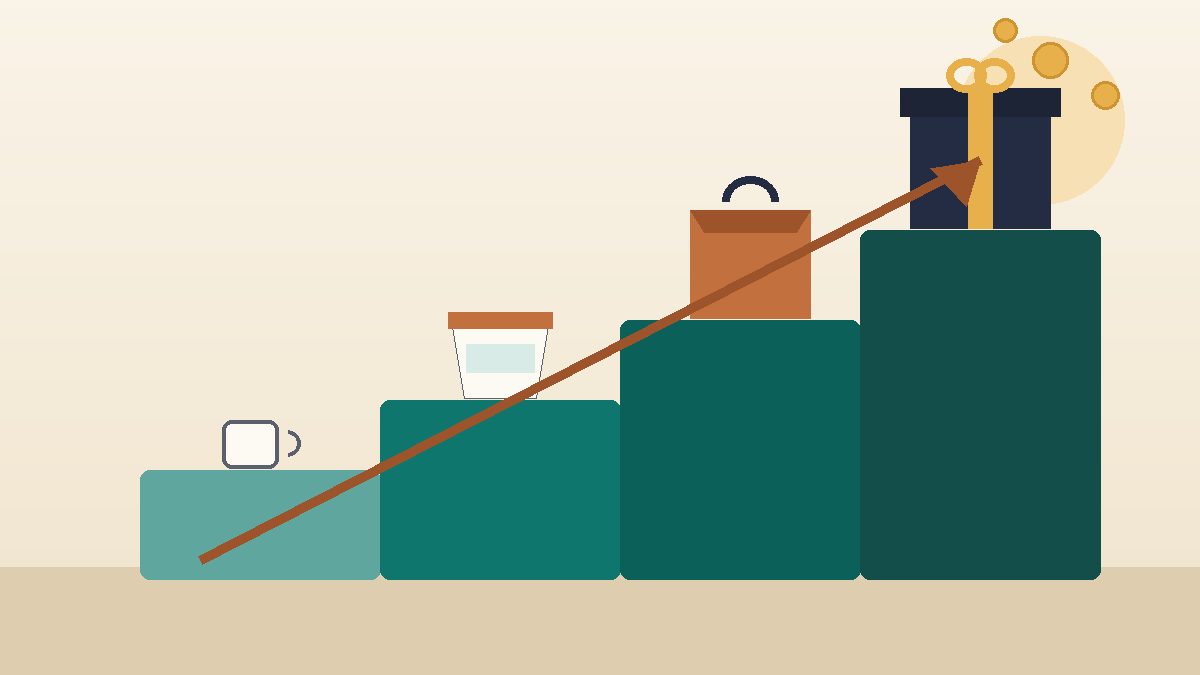
Lifestyle inflation survives because it never presents itself as a decision. Nobody sits down and chooses to spend the raise; instead, a dozen small upgrades each present as obviously reasonable in isolation. The slightly nicer apartment is justified by the commute. The better restaurants are justified by the harder job. The newer car is justified by reliability. Each step is defensible; the sum is a lifestyle that costs the entire raise plus a little. Economists call the underlying force the hedonic treadmill: humans adapt to improved circumstances with unnerving speed, so each upgrade briefly delights and then becomes the new baseline — invisible, unremarkable, and non-negotiable-feeling.
Two features make it worse. First, the upgrades concentrate in fixed costs — rent, car payments, subscriptions — which means they don’t just spend the raise, they lock in the spending. A year of nicer dinners is recoverable; a lease at the edge of your means is a two-year sentence. Second, the reference group shifts with income: new colleagues, new neighbors, new norms about what’s “normal.” Keeping up redefines itself upward automatically. You didn’t get more extravagant; the water level rose and you floated.
The result, documented in survey after survey: people earning twice the median income report living paycheck to paycheck at rates that would shock their past selves. Income went up; slack didn’t. The Consumer Financial Protection Bureau‘s financial wellbeing research keeps finding the same decoupling — financial security correlates with the gap between income and spending far more than with income itself. The gap is the asset. Creep is what eats it.
The Audit: Finding Your Creep
A one-evening reckoning
You can’t fight what you can’t see, so start with the creep audit — not a budget, a comparison. Pull your current monthly fixed costs and compare them against your memory (or old statements) from three to five years ago. The categories to line up: housing, car, subscriptions (list them all, every one), insurance, phone, dining/delivery, travel habits, and the “small luxuries” tier — coffee, grooming, hobby gear.
Three findings await almost everyone. First, the fixed-cost stack grew more than expected, mostly through moves and vehicles, each justified at the time. Second, subscriptions multiplied like coat-hangers — the average household now carries a dozen-plus recurring charges, several of them forgotten entirely. Third, and most interesting: some upgrades genuinely improved your life (the shorter commute, the gym you actually use), while others just… happened. That distinction — the valued upgrade versus the ambient one — is the entire raw material for the fix, because the goal was never to reverse creep. It’s to keep the upgrades that bought real happiness and reclaim the ones that bought nothing.
The 50% Rule for Raises
The single habit that beats creep
Here’s the one intervention that keeps lifestyle inflation from owning your future: whenever income rises, save half the increase automatically, before it reaches your spending life. Got a $400-a-month raise? The automatic transfer rises by $200, and your lifestyle gets the other $200 — immediately, guilt-free, fully enjoyed. The rule works because it splits the difference between the two failure modes: total freeze (saving the whole raise, which nobody sustains, because it asks you to live your thirties on your twenties’ salary while your peers visibly don’t) and total absorption (the default, where the raise vanishes into texture).
The magic is in the timing: the transfer must rise at the same moment the paycheck does. Money you never see in checking is money you never adapt to; hedonic adaptation works on experienced income, not gross income. Wait six months to “start saving more from the raise,” and the raise is already wallpaper — indistinguishable from your life, impossible to reclaim without feeling the loss.
Run the rule across a normal career and the compounding is startling. A person who saves half of every raise for twenty years ends up with a savings rate that climbs toward 30-40% of income — the territory where options multiply: career risks become affordable, the emergency fund is a fortress, and retirement stops being an abstraction. The SEC’s Investor.gov compound-interest tools make this visceral: the difference between a 10% and a 25% savings rate, compounded across decades, isn’t a number — it’s a different life at sixty.
Selective Deflation
Reclaiming the ambient upgrades
For creep that’s already happened, the move isn’t austerity — it’s curation. Go through the upgraded categories and sort them with one question: if this were removed tomorrow, would I genuinely miss it in a month? Not “would I notice it” — you’d notice everything. Would you miss it, the way you’d miss the shorter commute or the good mattress?
The sorting produces three piles. The keepers: upgrades that pass the miss test — keep them, enjoy them, this is what money is for. The negotiations: upgrades with partial value — the premium tier that could be the standard tier, the second car that could become a occasionally-rented car, the dining frequency that could halve with most of the pleasure intact. And the zombies: subscriptions and habits that fail the miss test completely, which get canceled without ceremony. The average household’s zombie pile is worth $50-150 a month — found money that costs no happiness at all, because you weren’t getting any from it.
One warning about deflation: do it in a single decisive pass, not as an ongoing project of self-denial. The households that succeed treat it like moving house — one weekend of decisions, then done, then the new (slightly leaner) baseline becomes the wallpaper. Slow-motion deflation, where you spend a year feeling deprived about the gym tier, converts savings into suffering and gets abandoned. Fast, final, and followed by automation of the reclaimed amount into savings: that’s the sequence.
The Social Physics Problem
When your circle inflates around you
The hardest part of holding the gap isn’t internal; it’s social. Peer spending is the strongest predictor of personal spending — if your friends’ default is weekend trips and tasting menus, your frugality reads as distance. Three strategies work without requiring new friends or a monastic reputation.
Be the proposer. Whoever suggests the plan sets the price point. The person who proposes the hike, the potluck, the off-peak vacation week isn’t the cheap one; they’re the organizer, and the group gratefully follows. Most friend groups secretly contain several people relieved when someone suggests the cheaper option.
Spend loudly on what you keep, quietly on what you skip. Selective splurging — the great dinner out, the gift that’s genuinely thoughtful — buys all the social warmth at a fraction of blanket lifestyle matching. Nobody tracks your skipped upgrades; everybody remembers the good bottle you brought.
Find one money-honest friendship. One person with whom you can say “I’m saving half my raise, so I’m skipping the ski weekend but I’m in for the cabin weekend” without performance. Money honesty is contagious, and the friend who can talk numbers is worth more than any budgeting app ever built.
What the Gap Actually Buys
The point of all this
It’s easy to read everything above as deprivation advice, so let’s end with what the income-spending gap purchases, because it’s not a number in an account. The gap buys the ability to leave a bad job without terror. It buys the car repair that becomes an errand instead of a crisis. It buys the year you could take a risk — the business, the sabbatical, the move — because your burn rate doesn’t own you. Every household that has ever felt financially free shares exactly one structural feature, and it isn’t income: it’s that life costs meaningfully less than it brings in, with the difference flowing somewhere with a future.
Lifestyle inflation is the force that closes the gap automatically; the 50% rule, the selective deflation pass, and the annual fixed-cost audit are the counterforce, run at a total cost of perhaps four hours a year. The salary raises will keep coming. Whether they buy freedom or merely nicer wallpaper is a decision — and now it’s one you’ve made on purpose.
The Anti-Creep Starter Kit
This month’s moves
| Move | Action | Effort |
|---|---|---|
| Creep audit | Compare fixed costs now vs. 3-5 years ago | One evening |
| Zombie purge | Cancel every subscription that fails the miss test | One hour |
| 50% rule | Set the transfer to rise with the next raise, automatically | Five minutes, once |
| Annual audit | Calendar the fixed-cost review, same date each year | One minute |
| Proposer habit | Suggest the next two friend plans, priced sanely | Ongoing, pleasant |
The Two Sides of the Ledger
A necessary word about income
Everything in this article treats spending as the variable, and a fairness note belongs here: for some households, the problem genuinely isn’t creep — it’s that income has lagged costs, and no amount of subscription-purging fixes arithmetic that’s broken on the earning side. The tell is in the audit itself. If your comparison shows fixed costs flat and still no gap, the frontier isn’t frugality; it’s income — the raise you haven’t asked for, the job change that the data consistently shows out-earns loyalty, the skill or credential with a real market price. The 50% rule then flips its emphasis: its job becomes capturing the gains when income moves, because income moves are exactly when creep strikes hardest. Spending discipline and income growth aren’t rivals; they’re the two halves of the same gap, and the households that widen it fastest pull both levers at once.
The Milestones Where Creep Hits Hardest
Four moments to pre-commit
Creep doesn’t arrive uniformly; it ambushes at specific life transitions, each of which deserves a pre-commitment made in advance. The first real job: the jump from student poverty to a salary is the largest percentage rise most people ever see, and the baseline you set in year one tends to persist — automate the transfer before the first paycheck lands. The big raise or promotion: the 50% rule, applied same-day, before anyone (including you) adjusts expectations. The dual-income moment: when a household goes from one income to two, the standard advice bears repeating — try living on one and banking the second, even partially; couples who do this for a few years discover options (a career break, a house deposit, a business) that their double-spending peers simply don’t have. The windfall: the bonus, inheritance, or refund, which needs its own rule — decide the split (a common one: 10% immediate fun, 90% future) the day you hear about it, because windfall money evaporates faster than earned money, for reasons psychologists have names for and your savings account doesn’t care about.
The Annual Anti-Creep Ritual
One hour, once a year
Pulling it all together into a maintainable habit: once a year — pick a fixed date, tie it to something memorable — run the one-hour review. Line up the fixed costs against last year’s (ten minutes), list the subscriptions from an actual statement scan (ten minutes), sort anything new by the miss test (fifteen minutes), raise the savings transfer by something, anything, even one percent (five minutes), and close with the only question that really matters: is the gap wider than last year? If yes, you’re winning; pour a celebratory coffee from your perfectly adequate coffee maker. If no, you know exactly which section of this article to revisit. The ritual works because it’s an appointment with the one number — the gap — that predicts financial calm better than income, net worth, or any app score ever devised.
The Permission Slip
Because someone should say it
One closing note for the person who’s read this far and is already drafting the austerity plan: the point of defending the gap is to fund a life, not to win a frugality contest. The framework here deliberately makes room for pleasure — the half of the raise you spend, the upgrades that pass the miss test, the loud selective splurges — because a savings rate that costs all joy is a savings rate with a two-year half-life. The households that pull this off long-term don’t look deprived; they look oddly relaxed, and the relaxation is the tell. They kept the good mattress, skipped the fourth streaming service, automated the difference, and stopped having the 11 p.m. money thoughts. That’s the whole product. The gap buys calm, the calm is the luxury, and it turns out to be cheaper than the wallpaper.
This article is educational and is not financial advice; your situation may warrant guidance from a qualified financial professional. Sources referenced include the Consumer Financial Protection Bureau and the SEC’s Investor.gov. No affiliate links or sponsored content. External links verified live at publication, August 2026.