Wired at Night, Exhausted All Day: Fixing a Backwards Body Clock
You drag through the daylight hours and then, maddeningly, come alive at 10:30 p.m. That’s not a personality quirk. It’s a timing problem with a mechanical fix.
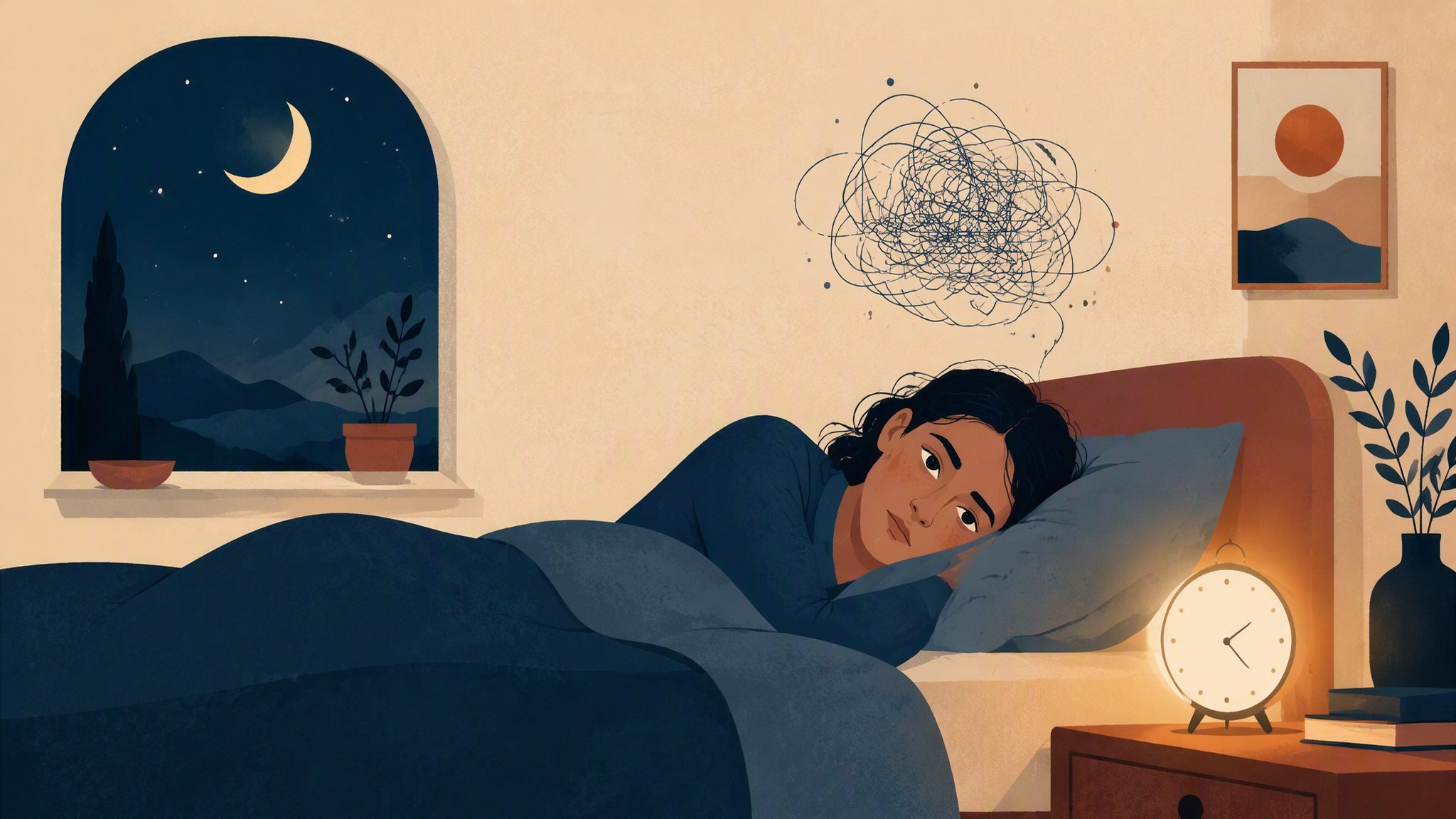
The day goes like this: the alarm is an act of violence, the morning is fog, the afternoon is wading through mud, and by early evening you’ve concluded you’re just not an energetic person. Then 10 p.m. arrives and somebody flips a switch. Suddenly you’re alert, chatty, full of ideas, reorganizing the kitchen at midnight. You lie down at one, exhausted but not sleepy, and the alarm finds you six hours later in the same fog. Round and round. If this is your life, you’ve probably concluded you’re broken, or lazy, or “just a night owl.”
Most likely, you’re none of those things. You’re mistimed. Your internal day is running a few hours behind the external one, and everything you experience, the morning horror, the evening electricity, is the predictable output of that offset. The fix isn’t discipline or a supplement. It’s understanding which levers move the clock and pulling them, consistently, for a couple of weeks. Let’s go through it.
Two Forces Run Your Sleepiness The clock and the pressure gauge
Sleep science’s most useful model says your sleepiness at any moment is the sum of two forces. The first is sleep pressure: a chemical called adenosine accumulates in your brain the longer you’ve been awake, like sand in an hourglass, and it’s what makes you drowsy at day’s end. Sleep drains it; caffeine blocks its receptors, which is why coffee borrows alertness rather than making it. The second force is your circadian rhythm: a roughly 24-hour wave of alertness generated by a master clock in the brain, which schedules hormones, body temperature, and energy independent of how long you’ve been awake.
Here’s the key insight: the circadian wave is not flat. It has peaks and troughs, and one of its strangest features is a surge of alertness in the late evening, the so-called “forbidden zone” for sleep, when the clock briefly promotes wakefulness a couple of hours before your natural bedtime. That’s your 10:30 p.m. second wind. It’s not you coming alive. It’s a scheduled surge arriving at the wrong time relative to your life. The Sleep Foundation’s circadian rhythm guide walks through this two-force system if you want the deeper version.
How the Clock Got Pushed Back The usual suspects
The clock drifts late for predictable, modern reasons. Evening light is the big one: bright screens and overheads after sunset tell the clock it’s still daytime, and late light pushes the whole rhythm later. Late caffeine blocks the pressure gauge, so you don’t feel drowsiness building at the right time. Weekend drift: sleeping two or three hours later on Saturdays shifts the clock, and Monday’s 7 a.m. alarm lands on what your body thinks is 4 a.m., which is why Monday mornings have that special jet-lagged flavor. Morning darkness completes the loop: if your day starts indoors, in dim light, the clock never gets the “this is morning” signal that would anchor it.
None of this requires a disorder. It just requires a normal modern schedule. The result is a clock set a couple of hours late: mornings land in your biological night, evenings in your biological afternoon. You’re not tired all day and wired at night because of some mystery. You’re living a few time zones west of your own schedule without leaving town.
The Lever That Actually Works Mornings, not bedtimes
Here’s where almost everyone attacks the problem at the wrong end. You cannot force yourself to fall asleep earlier; sleep isn’t under voluntary control, and lying in bed awake at 10 p.m. “trying” is how you teach your brain that bed is for frustration. What you can control is the wake time and the morning light, and those two levers move the entire clock. Set a fixed wake time, seven days a week, and get outdoor light within the first hour. The clock reads that morning signal and reschedules everything downstream, including the evening surge and, eventually, the arrival of real sleepiness.
The wake-time part is brutal for exactly three or four days. Then it starts working, because waking at a fixed time builds sleep pressure on schedule and anchors the clock’s day. The bedtime takes care of itself: you don’t go to bed earlier by decision, you get sleepy earlier by physics. The CDC’s sleep guidance leads with consistency for this reason. It’s the single highest-leverage habit in sleep, and it’s free.
The Evening Runway Making the surge smaller
While the morning anchors the clock, the evening stops fighting it. The practical list is short. Dim the lights from a couple of hours before your target bedtime, lamps instead of overheads, screens down and warmed. Set a caffeine cutoff that respects its half-life (afternoon, not evening; the next article in this series does the math). Alcohol within a few hours of bed fragments the back half of the night, so the nightcap is a loan at bad rates. And give your brain a transition: ten quiet minutes, a paper book, stretching, tomorrow’s list written down, so the day has an ending instead of a cliff.
What about the second wind itself, when it arrives? The mistake is believing it. The surge feels like genuine energy and invites you to start things, but it’s a scheduled blip that lasts roughly an hour, and acting on it (screens, projects, “one more episode”) pushes the clock later again. The move is to ride it quietly: low light, low stimulation, let it pass. People are often shocked by the discovery that on the far side of the second wind, sleepiness was waiting all along.
The Weekend Question Social jet lag, quantified
Researchers have a name for the gap between your weekday and weekend sleep schedules: social jet lag, measured as the difference in the midpoint of your sleep. A two-hour weekend lie-in is the equivalent of flying two time zones west every Friday and back every Sunday, and you’d never voluntarily sign up for weekly jet lag, yet most adults run exactly that schedule. The costs track the size of the gap: bigger swings associate with worse mood, worse metabolic markers, and the special misery of Monday morning.
The fix isn’t a joyless demand to rise at 6:30 on Saturdays forever. It’s keeping the weekend wake time within an hour of the weekday one, then, if you need more sleep, taking it as an early-afternoon nap or an earlier bedtime, which add sleep without moving the clock. That’s the distinction that frees you: the amount of weekend sleep is negotiable; its timing is what’s expensive.
“But I’m a Night Owl” Chronotype, honestly
Real night owls exist. Chronotype, your natural preference for earlier or later timing, is substantially genetic, and the true extremes are not fixable by habit; a genuine extreme owl forced onto a lark’s schedule will struggle indefinitely. But two things temper the excuse. First, the true extremes are rarer than the claim: most self-described owls sit within the normal range and are running a learned loop of late light, late caffeine, and weekend drift on top of a mild preference. Second, even genuine owls can shift their clock meaningfully, an hour or more, using the same levers, because genetics set the range and habits set the position within it.
The test is simple: run the morning-anchor protocol consistently for three weeks. If your evenings soften and mornings ease, you were mistimed, not nocturnal. If nothing budges after an honest month, you may be a true owl, and the game changes from “fix the clock” to “negotiate with life,” protecting a later but consistent schedule, guarding morning light anyway, and choosing work that fits where possible.
What Not to Do The tempting dead ends
Don’t willpower an early bedtime. Going to bed before sleepiness arrives manufactures frustration and teaches the bed to mean wakefulness; the bedtime is the output, not the input. Don’t lean on sleeping pills as a schedule fix. They sedate, they don’t retime the clock, and they’re a conversation for a doctor, not a lifestyle tool. Don’t chase it with supplements. Melatonin has a legitimate, narrow use as a timing signal (small doses, hours before bed, ideally under guidance), but the gummy-aisle megadoses at 11 p.m. are the wrong amount at the wrong time. And don’t catastrophize one bad night. A single short night raises sleep pressure for the next; the spiral starts when you start fighting the pattern with naps-at-6-p.m. and panic.
The through-line: the clock responds to signals, not force. Every effective intervention is a signal sent consistently, morning light, fixed wake time, evening dimness. Every failed one is an attempt to overpower the system.
The Two-Week Reset The protocol, in order
Days one to fourteen, non-negotiable: fixed wake time, every day, weekends included, within a thirty-minute window. Outdoor light within an hour of waking, ten to thirty minutes depending on cloud. Caffeine cutoff eight to ten hours before your target bedtime. Evening dimming from two hours before bed, screens warm and low. Second-wind rule: when the 10:30 surge arrives, stay low-stimulation and let it pass. And no sleeping in; if you need catch-up, nap briefly before 3 p.m. or go to bed when sleepiness arrives, which will start happening earlier within the first week for most people.
Track just two things: the time you get outside each morning and the time you feel genuine sleepiness at night. The gap between the version of you at day one and day fourteen is usually obvious, sleepiness arriving an hour or two earlier, mornings losing their cruelty. The NHLBI’s sleep resources back the same fundamentals. Two weeks of signals beats two years of trying harder at the wrong end of the day.
When It’s More Than Timing The escalation rule
Timing problems yield to timing fixes within a few weeks. If yours doesn’t, widen the lens. Loud snoring with pauses, gasping, or unrefreshing sleep despite adequate hours suggests sleep apnea, which is common, underdiagnosed, and very treatable, and no schedule trick touches it. Months of unhappiness with early-morning waking can be depression’s signature rather than a clock problem. And long-standing, severe evening delay that resists honest effort can be delayed sleep phase disorder, a real circadian condition with real treatments, light boxes, timed melatonin, chronotherapy, administered by sleep specialists. The American Academy of Sleep Medicine can point you to accredited centers. The rule: give the signals three honest weeks, and if the pattern holds, bring in someone whose job is patterns.
Most of you won’t need that paragraph. Most backwards clocks are just unsignalled clocks, living indoors, lit at the wrong hours, drifting on weekends. Send the signals, and the wired-at-night, dead-by-day version of you turns out to have been a timing artifact all along. The morning stops being an enemy. The evening surge becomes a quirk you watch pass, like weather, on your way to a bed that finally works.
The Midnight Rebellion Revenge bedtime procrastination
For a lot of wired-at-night people, the second wind isn’t the real driver; it’s the first moment all day that belongs to you. Researchers call it revenge bedtime procrastination: staying up late not because you’re not tired, but to reclaim personal time from an over-scheduled day, and it’s most common among people whose daylight hours are fully owned by work, kids, or care duties. The late-night scroll isn’t really about the content. It’s the only unscheduled hour you got. If that stings to read, the fix isn’t just earlier sleep, it’s moving the “me time” earlier: a protected thirty minutes after dinner that’s yours, deliberately, so midnight stops being the only slot available. The clock work in this article still applies; the rebellion just needs its own answer. You can’t sleep-schedule your way out of a day that contains no you.
The Hard Cases Shift work, newborns, and other realities
Some readers can’t run a clean protocol, and they deserve the honest version rather than the idealized one. Shift workers: the principles invert but hold, anchor your “morning” whenever you wake, get bright light early in your shifted day, and defend total darkness (blackout plus mask) for daytime sleep; rotating schedules are genuinely harmful to health, so if your employer offers fixed shifts, take them. New parents: the clock advice is mostly useless during the newborn months, so the goals shrink to damage control, morning light when you can get it, caffeine timed to the feeds, and dropping the guilt; this is a season, not a failure. Everyone else with a chaotic month: protect the two cheapest levers, fixed wake time and morning light, and let the rest slide until life stabilizes. A partially consistent signal beats a perfect protocol abandoned on day four.
One last wrinkle worth naming, because it quietly derails a lot of resets: your partner’s clock. If you’re an owl married to a lark, their 6 a.m. cheerfulness and your midnight productivity are not moral positions, they’re two different circadian settings sharing one bedroom, and the fix is coordination, not conversion. Negotiate the shared constraints (a wake time both can live with, dim lighting rules in the evening, headphones for the late one, a gentle-alarm agreement for the early one) and accept that some gap remains. Couples sleep researchers find the difference itself isn’t what hurts relationships; the fighting about it is. Retiming your clock is, in the end, a solo project. Keeping the peace while you do it is the duet.
This article is general education, not medical advice; persistent sleep problems, loud snoring with pauses, or early-morning waking with low mood warrant a clinician or an accredited sleep center. Sources linked above include the Sleep Foundation, the CDC, the NHLBI, and the AASM. This article contains no affiliate links and no product recommendations. All outbound links checked live in August 2026.